Industry Insights
Practical guides, case studies, and technical deep-dives on pipeline repair.
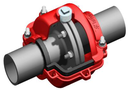
HDPE Pipe Repair Clamps: Options for Repairing Polyethylene Water and Gas Mains
HDPE pipes need different repair clamps than iron or steel mains. This guide covers clamp selection, gasket materials, OD tolerances, and installation precautions specific to high-density polyethylene pipelines.
Read article →
Universal Coupling vs Repair Clamp: Choosing the Right Fitting for Your Pipeline Problem
Universal couplings and repair clamps look similar but solve different problems. This guide explains what each product does, when to use each, and how to specify correctly for mixed-material or non-standard OD pipelines.
Read article →
Hot Tapping Permit Requirements: What Water and Gas Utilities Need Before They Drill
Before hot tapping a live water or gas main, you need more than a machine. This guide covers permit requirements, safety documentation, risk assessments, and regulatory approvals across key markets.
Read article →
Live-Line Water Main Repair: How to Stop a Leak Without Shutting Down Service
Step-by-step guide to repairing pressurized water mains without service interruption. Covers split-sleeve clamps, live-line hot tapping, work-zone safety, and when shutdown is unavoidable.
Read article →
Emergency Pipe Repair Checklist for Water Utility Operations Teams
A field-ready checklist for water utility crews responding to a pipeline break. Covers isolation, sizing, clamp selection, installation, pressure testing, and documentation — from the first call to the post-repair report.
Read article →
How Long Does a Pipe Repair Clamp Last? Lifespan, Failure Modes, and Replacement Triggers
A well-installed ductile iron repair clamp typically lasts 15–25 years. This guide covers the factors that shorten clamp life, how to inspect for failure, and when to replace vs. re-torque.
Read article →
ISO 25980 vs AWWA C227: Which Standard Applies to Your Repair Clamp?
ISO 25980 and AWWA C227 are the two dominant standards for pipe repair clamps. This guide explains what each covers, where they overlap, and how to specify compliance in a procurement document.
Read article →
Pipe Repair Clamp Size Selection Guide: DN40 to DN2000
How to select the right repair clamp size for any pipe diameter. Covers DN measurement, OD vs nominal size, tolerance matching, and common sizing mistakes for DI, steel, plastic, and concrete pipes.
Read article →
Saddle Clamp vs. Tapping Tee: Which to Use for a Live Branch Connection
Both saddle clamps and tapping tees create branch connections on live pipes — but they suit different pressures, pipe materials, and long-term load conditions. This guide explains when to use each.
Read article →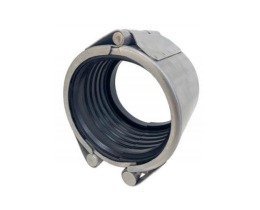
SS304 vs SS316 Repair Clamp: Which Grade for Your Application?
SS304 and SS316 repair clamps look identical but perform very differently in corrosive environments. This guide covers when SS316 is worth the premium — and when SS304 is the right call.
Read article →
Emergency Repair Clamp Stockpile: Inventory Strategy for Water Utilities
How water utilities should size their emergency repair clamp inventory. Covers ABC analysis, the 80/20 rule for pipe sizes, lead-time buffer math, and cost benchmarks — with a practical checklist for stock rotation.
Read article →
Repair Clamp Terminology Decoded: H80, DN100, PN16, QT450-10 — What Catalogs Actually Mean
A reference glossary for repair clamp specifications. Translates every abbreviation you'll see in a Chinese, European, or American datasheet — DN, OD, PN, QT, EPDM, FBE, AWWA, ISO, and more.
Read article →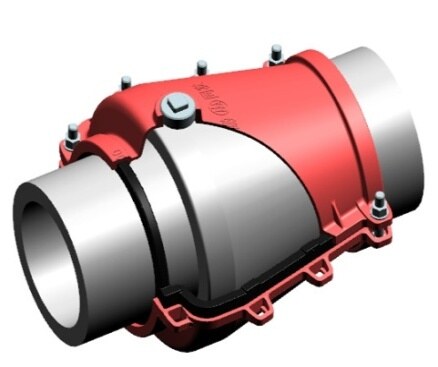
Stainless Steel vs. Coated Ductile Iron: Choosing Corrosion-Resistant Repair Clamps
When a project spec calls for corrosion resistance, you have two mainstream options — stainless steel body, or coated ductile iron. Here's the engineering trade-off, the cost delta, and the soils and fluids where each wins.
Read article →
Hot Tapping vs. Full Shutdown: Real Cost Comparison on a DN800 Main
We compared hot tapping and shutdown methods on a real DN800 water main branch connection. Hot tapping saved $18,000 and 14 hours of service interruption.
Read article →
How to Choose the Right Pipe Repair Clamp
A practical guide to selecting repair clamps by pipe material, leak location, and pressure rating. Covers DI, steel, plastic, and concrete pipes DN15 to DN2000.
Read article →
QT450-10 Ductile Iron Explained: What the Grade Means for Repair Clamp Performance
QT450-10 is the default ductile iron grade for repair clamps across the industry. Here's what the number means, how it compares to equivalent Western grades, and why material choice matters for clamp longevity.
Read article →
Saddle Clamp Sizing: Branch-to-Main Ratio, Pressure Ratings, and When to Use a Tapping Sleeve Instead
How to size saddle clamps for branch connections — the branch-to-main ratio rule, pressure derating at larger sizes, and the point where you need a full tapping sleeve instead. A technical guide for utility engineers and contractors.
Read article →
Hot Tapping Safety Checklist: OSHA and NFPA Requirements Before the First Cut
A pre-job safety checklist for hot tapping operations, grounded in OSHA 1910.252 hot work standards, 1910.146 permit-required confined space rules, and NFPA 51B fire watch requirements. The steps crews skip — and the consequences.
Read article →
Water Main Break Response: The First 60 Minutes for Utility Crews
A minute-by-minute playbook for utility repair crews responding to a water main break. Covers dispatch, isolation, excavation, clamp selection, and return-to-service — with the decisions that reduce customer-minutes-out-of-water.
Read article →
Why NBR (Not EPDM) is Mandatory for Gas Line Repair Clamps
Using an EPDM-gasket repair clamp on a natural gas line is a code violation in most jurisdictions — and a safety hazard. Here's the chemistry behind the rule, what the regulations say, and how to specify correctly.
Read article →
DI, Steel, PE, and Concrete Pipes: How Material Changes Your Repair Clamp Choice
Every pipe material behaves differently under clamp pressure. DI is rigid, PE creeps, concrete is rough. This guide walks through how each material dictates the clamp design — and why mixing them causes repair failures.
Read article →
Pipe Repair Clamp Standards: AWWA, EN, ISO, and GB Compared
A practical reference to the main repair clamp standards — AWWA C219/C230, EN 14525, ISO 17885, and GB/T 12459. What each covers, what it doesn't, and why it matters when you're buying from an overseas manufacturer.
Read article →