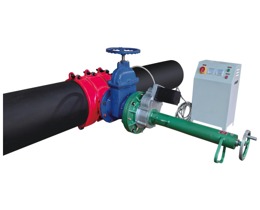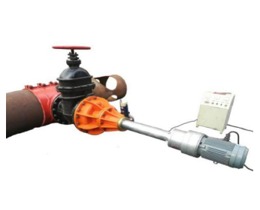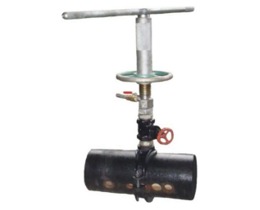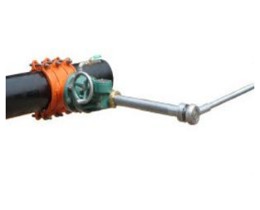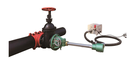
Hot tapping — drilling a branch connection into a live, pressurized pipeline — is one of the most operationally valuable techniques in pipeline maintenance. It lets utilities add a new service connection, install a bypass, or insert an isolation valve without shutting down the line. For a water main serving a hospital or a gas main running through a city centre, a shutdown measured in hours can mean loss of life or tens of thousands of dollars in business disruption costs.
But hot tapping also carries real risk. A mistake — wrong clamp seating, incorrect tapping machine setup, or an unforeseen pipe defect — can result in an uncontrolled release of pressurized water, explosive gas, or hazardous process fluid. The regulatory frameworks around hot tapping exist because several of these accidents have happened, and the lessons are now codified in permits, procedures, and training requirements.
This guide explains what you need to have in place before a hot tap starts — across water utilities, gas distribution systems, and industrial pipelines — and how the requirements vary by geography and application.
What the permitting process is actually for
A hot tap permit is not a bureaucratic formality. It is a structured checklist that forces the responsible engineer to answer: is this pipe in a condition that can safely sustain the tapping operation? The questions that matter are:
- Is the pipe wall thick enough to withstand the tapping cutter forces without collapsing?
- Has external corrosion or internal scaling reduced wall thickness at the tap point?
- Is the operating pressure within the tapping machine’s rated capability?
- Has the pipe material been confirmed (steel, ductile iron, HDPE, or grey cast iron all require different cutting speeds and cutter types)?
- Is the pipe free of unexpected contents — sediment, gas pockets in a water main, or water in a gas main — that would change the fluid dynamics of the tap?
- Has the equipment been inspected and certified for this pressure class and pipe material?
A permit that forces these questions to be answered in writing, and signed by a responsible engineer, is the primary safeguard against preventable accidents.
The universal elements every hot tap permit should include
Regardless of jurisdiction, best-practice hot tap permits cover the following elements:
1. Pipeline identification and condition assessment
- Asset ID, route, and GIS coordinates of the tap location
- Pipe material confirmed (do not rely on as-built drawings — verify with a pipe sampling drill or magnetic test)
- Nominal diameter and confirmed wall thickness at the tap point (ultrasonic thickness gauge reading is standard)
- Operating pressure at the tap point, confirmed from SCADA or a local pressure gauge, not nominal system design pressure
- Fluid contents: potable water, raw water, natural gas, LPG, processed gas, or chemical
- Known defects within 5 pipe diameters of the tap location: corrosion pits, weld defects, prior repairs
2. Minimum wall thickness check
This is the single most important pre-tap check. The tapping cutter must not penetrate the far wall of the pipe (bore-through). The minimum wall thickness to prevent bore-through is defined by:
t_min = D_tap / (2 × σ_allowable / P_operating) + cutting allowanceWhere D_tap is the cutter diameter, σ_allowable is the material allowable stress, and P_operating is the operating pressure.
In practice, most tapping machine manufacturers publish simple tables that give minimum wall thickness as a function of tap diameter and operating pressure. Use the table for your equipment. If the measured wall thickness is below the minimum, the tap must not proceed at that point.
For grey cast iron mains, the risk is higher: grey cast iron has essentially zero ductility and can crack radially rather than deform plastically. Many jurisdictions specify that grey cast iron mains above a threshold age (commonly 40+ years) require wrist-ground ultrasonic scan along a 500 mm length centred on the tap point before the permit is issued.
3. Equipment certification and inspection record
- Tapping machine model, serial number, and date of last calibration or inspection
- Saddle clamp (adapter fitting) — pressure rating, size certification, and gasket inspection
- Drill/cutter — confirmed for the pipe material (carbide cutters for ductile iron and steel; slower-speed high-speed steel for grey cast iron; specific HDPE cutters for polyethylene)
- Hydraulic hoses and fittings — rated for the working pressure, no visible damage
- Valve to be inserted — full bore, pressure-rated to system MAOP, and function-tested before installation
4. Work zone controls
- Excavation dimensions and shoring plan
- Isolation valve locations and status (even a live tap requires identified isolation for emergency shutdown)
- De-energised zone for electrical hazards
- For gas: gas monitoring equipment in place, lower explosive limit (LEL) instruments calibrated, ignition source controls (no smoking, no spark-producing tools, intrinsically safe lighting)
- Personnel protective equipment (PPE): minimum requirements for water mains vs. gas mains
5. Qualified personnel
Most regulatory frameworks require the person operating the tapping machine to hold a specific certification or to have demonstrated competency under a qualified supervisor. The permit must name the lead operator and their qualification.
6. Contingency procedure
What happens if the tap goes wrong? The permit must identify: who is the emergency contact, where are the isolation valves, how do you stop the flow if the inserted valve fails to seat. For gas mains, the contingency typically involves utility emergency response and public evacuation procedures.
Water utility permit requirements by region
China (mainland)
Water utility hot tapping in China is governed by local city-level or provincial-level technical standards, typically based on the national standard GB/T 29047 (pipeline maintenance and repair). Key requirements:
- The tapping operation must be authorised by the utility’s operations safety department — typically a signed work order from a licensed engineer (注册设备工程师)
- For municipal water mains DN200 and above, a pre-tap condition inspection is required, usually including ultrasonic thickness gauging
- The tapping machine operator must hold a current special equipment operator’s licence (特种设备操作证) issued under TSG standards
- A safety watch (安全监护) must be present for the duration of the operation
- Records are kept for a minimum of 5 years in the utility’s asset management system
Philippines
Philippine water utilities (MWSS concessionaires, LWUA-supervised water districts) operate under Department of Public Works and Highways (DPWH) guidelines. There is no single national hot tap standard, so requirements vary by utility. Best practice accepted by MWSS concessionaires includes:
- A work permit signed by the utility’s engineering department
- Ultrasonic wall thickness inspection for mains over 30 years old or where external corrosion is visible
- Equipment from an approved supplier with documented pressure test certification
- A trained operator from the utility or a certified contractor
- Post-tap pressure test and leak inspection before backfilling
GCC / Saudi Arabia
Hot tapping on Saudi Aramco pipelines falls under SAES-W-011 (Welded Repairs of Pipelines and Piping) and SAES general pipe branch requirements, with hot tapping on non-Aramco utility mains governed by SAES-A-100 and project-specific engineering procedures. DEWA (Dubai) and KAHRAMAA (Qatar) have their own engineering standards that are broadly aligned with AWWA best practices.
General requirements across GCC utilities:
- Method Statement (MS) and Risk Assessment (RA) submitted and approved before work begins, typically 5–10 business days in advance
- Material Inspection Report (MIR) for the saddle clamp and tapping machine
- Hydrostatic test certificate for the inserted isolation valve
- A hot-work permit if any welding is involved in the fitting installation
- Third-party inspection for Aramco-affiliated projects
Mexico
CONAGUA (national water authority) and state water utilities in Mexico reference AWWA C standards for tapping operations. Local state utilities (SAPAM, SIMAPAS) typically require:
- A formal work permit from the utility’s operations department
- A risk analysis (análisis de riesgo) for taps above DN200 or above 0.6 MPa
- Proof that equipment is rated for the operating pressure
- A post-tap visual inspection and pressure observation period before backfill
European Union / CE-marked equipment
The EU does not have a single hot tap standard, but EN 805 (water supply requirements), EN 545 (ductile iron fittings), and the Pressure Equipment Directive (PED 2014/68/EU) collectively apply. Key practical requirements:
- Saddle clamps above 200 L/min or above 10 bar in Category II and above require CE-marking under PED
- Operators are typically required to hold CSWIP or equivalent certification for fusion tapping (gas pipelines)
- Network operators’ own engineering standards take precedence for their systems
Gas pipeline additional requirements
Gas lines carry significant additional regulatory burden over water lines. Universal requirements across virtually all jurisdictions include:
No hot tap on grey cast iron gas mains. The combination of brittle material, gas, and cutting forces is not considered acceptable by any major regulatory framework. All grey cast iron gas mains must be isolated, vented, and purged before any work.
Hot tap diameter limits. Most gas utility standards limit hot taps to a maximum of 80–85% of the host pipe diameter (to maintain structural integrity of the remaining pipe ring).
Purging after tap. After the cutter is withdrawn and the inserted valve is closed, the saddle/valve body cavity must be purged with the system gas before the valve is opened to service. This prevents an air-gas mixture (explosive) from being the first thing to flow into the new branch.
Pressure limitations. Many gas utility standards limit live hot tapping to mains operating at or below a specific maximum pressure — commonly 400 kPa (4 bar) for distribution mains in many European countries. High-pressure transmission mains may require an engineered sleeve weld before tapping rather than a bolted saddle clamp.
Typical documentation package
The complete documentation you should have on file before a hot tap begins:
- Pipeline identification record — asset ID, material, diameter, age, operating pressure
- Ultrasonic thickness inspection report — gauged wall thickness at and near the tap point
- Method Statement and Risk Assessment — signed by responsible engineer
- Equipment inspection records — tapping machine, saddle clamp, valve
- Operator certification — copy of the operator’s qualification document
- Work permit — signed and dated by the issuing authority
- Emergency response plan — contacts, isolation points, evacuation procedure
- Post-tap completion record — tap completed without incident, valve seated, pressure observed
This package is the record that demonstrates due diligence if anything goes wrong subsequently. It is also the package that most reputable utilities require before authorising a contractor to perform the work.
PipeKnot supplies electric and pneumatic tapping machines (DK4, DK6, DK8 series) rated for DN80 through DN800 host pipes at up to 1.6 MPa. We can provide equipment documentation, material certificates, and technical support to assist in the permit preparation process. Contact us with your pipe size, pressure, and location and we will confirm the right machine configuration.