First time buying repair clamps internationally? The datasheets look like alphabet soup. “QT450-10 body, EPDM seal, DN100 × PN16, H100 model per GB/T 1348, NSF-61 certified, FBE coated per ISO 8179-1.” This post is your translator. Every term, what it measures, and why it matters.
Pipe sizing
DN (Diamètre Nominal / Nominal Diameter): the nominal pipe size in millimeters. DN100 ≈ 4-inch. This is not the actual outer diameter — it’s a label. A DN100 ductile iron pipe typically measures 118 mm OD.
OD (Outer Diameter): the actual measured outer diameter of the pipe, in millimeters or inches. The number that actually matters when sizing clamps.
ID (Inner Diameter): inside diameter of the pipe. Mostly used for flow calculations, not for clamp sizing.
IPS (Iron Pipe Size): the American equivalent of DN. IPS 4 ≈ DN100. Use IPS sizing on pipe specified in inches; DN on metric.
Nominal Pipe Size (NPS): same as IPS. The label for pipe sizes in American spec.
Pressure ratings
PN (Pressure Nominal): European pressure rating in bar (1 bar ≈ 0.1 MPa ≈ 14.5 psi). PN16 = 16 bar = 1.6 MPa = 232 psi. Common ratings: PN6, PN10, PN16, PN25, PN40.
MPa: megapascals. 1 MPa = 10 bar. Standard municipal water: 1.0 MPa. High-pressure: 1.6 MPa.
psi (pounds per square inch): American pressure unit. 1 MPa ≈ 145 psi.
Working pressure: the maximum pressure the clamp is rated for under continuous operation. Different from burst pressure (destructive test) and test pressure (1.5× working is typical).
Derated pressure: manufacturer’s allowable pressure at elevated temperature, or for saddle clamps with large branch diameters. Always lower than nominal rating.
Material codes
QT450-10: Chinese (GB/T 1348) ductile iron grade. 450 MPa minimum tensile, 10% minimum elongation. Equivalent to EN-GJS-450-10 (Europe) and ASTM A536 65-45-12 (US). See our QT450-10 post.
QT400-18, QT500-7, QT600-3: other GB/T 1348 grades. First number = tensile (MPa), second = elongation (%).
EN-GJS: European ductile iron designation, EN 1563. EN-GJS-450-10 has the same spec as QT450-10.
ASTM A536: American ductile iron spec. Grade 65-45-12 matches QT450-10 / EN-GJS-450-10.
FCD: Japanese ductile iron (JIS G5502). FCD450 = 450 MPa tensile.
304 stainless: austenitic stainless with 18% Cr, 8% Ni. General-purpose corrosion resistance.
316 stainless: austenitic stainless with 17% Cr, 10% Ni, 2% Mo. Better chloride resistance; used for seawater, coastal service.
316L stainless: low-carbon variant of 316. Better for welding.
Carbon steel bolting: cheap and strong, but corrodes. Grades like ASTM A307 (low-strength), A193 B7 (high-strength, often used for flange bolting).
Stainless bolting: typically 304 or 316 for corrosive environments. More expensive than carbon steel.
Gasket / seal materials
EPDM (Ethylene Propylene Diene Monomer): default rubber for water service. Good UV, ozone, and weather resistance. Not suitable for hydrocarbons or oils. Temperature range roughly −40°C to +120°C for repair-clamp applications.
NBR (Nitrile Butadiene Rubber / Buna-N): for gas, oil, diesel, hydrocarbons. Required for natural gas service — see our NBR post. Temperature range typically −20°C to +80°C.
FKM / Viton: fluoroelastomer. Handles hydrocarbons AND water AND chemicals AND high temperatures (up to ~200°C). Expensive.
Shore A hardness: rubber hardness measurement. Typical repair clamp gasket: 70A. Softer (50A) for concrete pipe; harder for high-pressure service.
Coatings
FBE (Fusion-Bonded Epoxy): powder-applied epoxy coating, cured with heat, bonds to metal. Standard thickness 250–400 µm. NSF-61 certified for potable water.
Zinc coating (ISO 8179): arc-sprayed zinc, 200 g/m² minimum. Provides galvanic corrosion protection. Usually combined with FBE topcoat.
Liquid epoxy: field-applied epoxy. Less durable than FBE. Used for touch-up, not primary protection.
Polyurethane coating: alternative to epoxy for UV-exposed applications.
NSF-61: US standard for materials in contact with drinking water. Certification confirms no harmful leachables.
Clamp-specific terms
H (followed by number): PipeKnot/Chinese convention for repair clamp model. H100 = clamp for DN100 pipe. H80 = DN80, H1600 = DN1600.
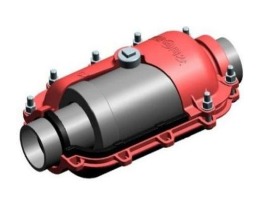
H+ suffix (加长型): extended-length version. H300+ is longer than H300, used for longer cracks or better seal distribution.
Socket clamp / 承插哈夫节: wraps around a bell-and-spigot joint.
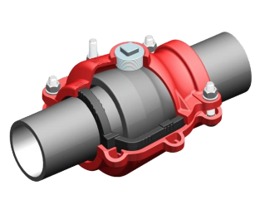
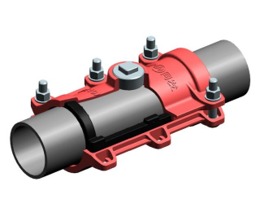
Straight-pipe clamp / 直管哈夫节: wraps around a mid-section crack or pinhole on straight pipe.
Sleeve clamp / 套袖哈夫节: for sleeve-joint connections (mechanical or bolted sleeves).
Reverse clamp / 反扣哈夫节: for reverse-flared or inverted joints.
Flange clamp / 法兰哈夫节: for flanged-joint leaks (around the flange face).
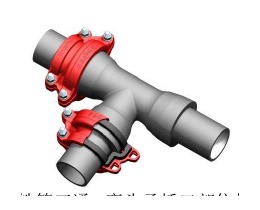
Saddle clamp / 马鞍管卡 / Split tee: full-circumferential or U-shape fitting clamped over a main, with an outlet for a new branch.
Haff / 哈夫: Chinese phonetic for “half” — any clamp that assembles from two half-shells around the pipe. Same idea as “clamp” or “coupling half.”
Link coupling / 串联器: joins two clamps in-line for extra-long repairs.
Universal connector / 万能连接器: wide-tolerance connector that joins pipes of different materials/diameters via a flexible seal design.
Expansion joint / flange adaptor: not a repair clamp — it accommodates thermal movement in flanged systems.
Standards and testing
AWWA: American Water Works Association. Publishes water-industry standards (C219, C230, etc).
EN: European Norm. EN 14525 covers wide-tolerance couplings in Europe.
ISO: International Organization for Standardization. ISO 1083 is the ductile iron casting base standard.
GB / GB/T: Chinese national standards. “GB” = mandatory, “GB/T” = recommended (but industry-standard).
PED 2014/68/EU: Pressure Equipment Directive. European regulation for pressure-containing equipment; certification categories based on risk.
CE marking: required marking for certain products sold in the EU, including pressure equipment above risk thresholds.
ISO 9001: generic quality management system certification. Does NOT certify product compliance — only that the manufacturer has a documented quality system.
ISO 14001: environmental management system. Non-technical but often requested.
ASTM: American Society for Testing and Materials. Publishes material specifications (ASTM A536 for ductile iron, etc).
Hydrostatic test: pressure test with water, typically 1.5× working pressure, held for a specified duration. Standard QA step for every repair clamp.
Installation terms
Torque spec: manufacturer-recommended bolt tightening torque. Usually given in N·m or ft·lbf. Over-torque cracks pipe; under-torque leaks.
Cross pattern: tightening bolts in a crisscross sequence (like a car wheel) rather than sequentially around the clamp. Essential for even gasket compression.
Staging: tightening bolts in multiple passes (30%, 60%, 100%) rather than one full pass. Critical for large clamps.
Cold test / pressure test: pressurizing the clamp after installation but before hot tapping or full service. Catches installation errors.
Slow open: gradually opening a valve after repair to re-pressurize, in 3 stages (20% / 50% / 100%) to prevent water hammer damage to the fresh clamp.
Common mistakes when reading specs
- DN100 ≠ 100 mm OD. DN is nominal; OD is actual. A DN100 DI pipe is ~118 mm OD. Always measure.
- PN10 ≠ 10 MPa. PN is bar, not MPa. PN10 = 1.0 MPa.
- “Ductile iron” without a grade is meaningless. Insist on the grade (QT450-10, EN-GJS-450-10, or ASTM A536 65-45-12) and a mill cert.
- “EPDM” without hardness is vague. Default is ~70 Shore A but specialty applications need specific hardness spec.
- “Coated” without thickness is vague. Specify dry film thickness (DFT) in µm, plus holiday/adhesion tests.
- “ISO certified” usually means ISO 9001 — not product compliance. Different thing. Ask for product-specific standards.
Quick reference: what to specify on a purchase order
Minimum spec for a ductile iron repair clamp:
- Size: DN___ (with measured OD in mm)
- Pipe material: (DI / steel / PE / PVC / concrete / galvanized)
- Joint type: (socket / straight / sleeve / flange / tee / elbow)
- Working pressure: ___ MPa
- Body material: QT450-10 per GB/T 1348 (or equivalent EN/ASTM spec)
- Gasket: EPDM for water, NBR for gas, FKM for specialty
- Coating: arc-sprayed zinc 200 g/m² + FBE 250 µm minimum (ISO 8179-1)
- Bolting: (carbon steel / 304 stainless / 316 stainless)
- Test requirement: hydrostatic 1.5× working pressure per AWWA/EN/GB
With that spec, you’ll get consistent product from any qualified manufacturer. Send us your spec and we’ll quote.